
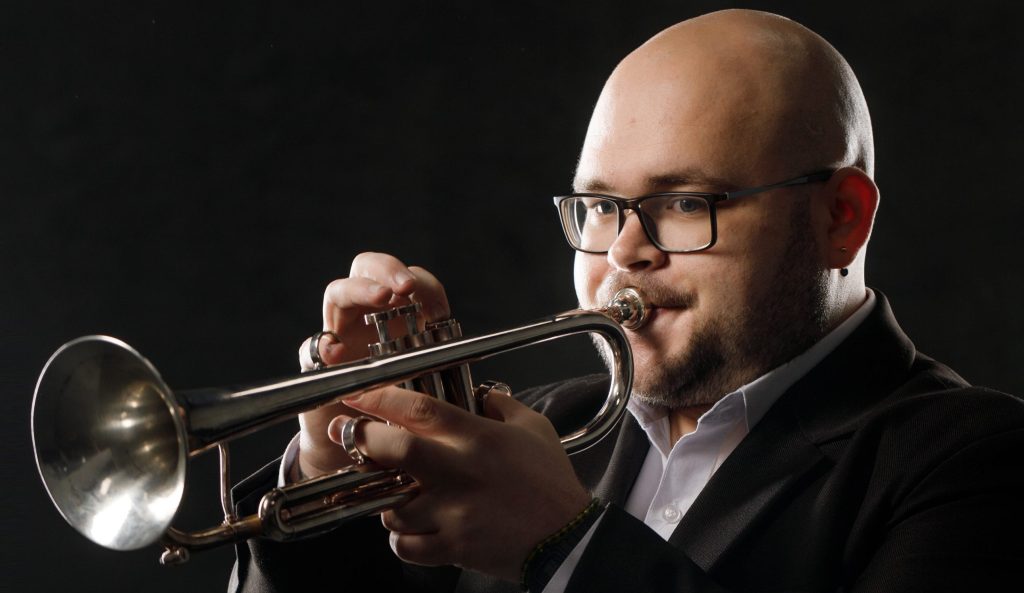
Efficiency in Lead Trumpet PLAYING
I’ve always heard that there are two types of lead trumpet players: those who seem to have a natural facility, and those who had to learn how to do it.
For many years, I honestly thought the difference was purely technical. “Natural” lead players seem to have more endurance, better air control, and incredible strength. Over time, I realized that those players were actually extremely efficient and able to communicate the musical intents while leading the band. Their knowledge of the style and musical background was solid and served the music’s purpose as much as their impressive technique did.
On the other hand, I have noticed that many inexperienced leads mistakenly believe that anything can be fixed by being more technically proficient. Technically driven players focus more on aspects like endurance, embouchure, air, tongue, and range, almost like athletes training a body or engineers refining a machine. And that’s fine we need to do that at a certain point, but in my experience, if you rely solely on technique and physical mechanics without letting music guide you, playing can become exhausting. You end up fighting the instrument instead of making it sing.
You’re thinking about technicalities instead of the phrases, dynamics, and the story you want to tell.
Once I recognized this I started experimenting with the approach that if I allow the music to lead, the technique will support it. As soon as I switched on focusing first on musical goals like the phrasing, the dynamics, the expression, the technical elements seemed to fall naturally into place. Things I used to struggle with like quick embouchure shifts, air flow, articulations, and range all became tools at my service, not obstacles.
Just to be clear: there is no single “right” way to play lead trumpet.
I’m not presenting a rulebook, just a humble perspective — my perspective — on how to play more efficiently and with less fatigue, while still expressing the music fully.
One of the most important lessons I’ve learned through my time playing is that every technical choice should serve the musical idea not the other way around.
For example, when I’m preparing repertoire to play a gig, I don’t first ask myself how much air I need or which embouchure adjustment to make, instead, I ask myself: “What emotion does this phrase need? How/ Where should it breathe? How should it pace it?”
Once the musical direction is clear through the song, the technique becomes almost automatic. I adjust all the aspects of my playing only to support the musical intention, not as an exercise of control or endurance.
Surprisingly, thinking musically has helped me anticipate challenges before they happen. Instead of reacting to a high note at the last second, or forcing a dynamic I’m not ready for, I plan phrasing and this creates a flow that makes playing feel lighter and more “natural”.
This goes hand in hand with the efficient use of energy. From my experience, isolating a technique from musical context frequently results in inefficient energy use. I’ve seen musicians who can play every note in the register but sound stiff or disconnected because their focus is on the mechanics, not the music. And I’ve been guilty of that too, of course, but throughout my career I’ve comprehended that if I plan accordingly I can save energy and stamina for when it matters the most. When my technical decisions are taken to serve the music and I let the music guide me first, the sound is more relaxed, the articulation cleaner, and I am consequently more efficient.
Ultimately, applying music to technique is about intention over effort, every note, dynamic, and articulation is a choice guided by expression, not by habit or physical pressure.
It’s no secret that we trumpet players are naturally drawn to the high register. We chase it, we practice it constantly because we love the thrill of those notes. However, when the primary focus of our practice or performance is how high we can play, we risk not getting a deeper understanding of the music in terms of harmony and rhythm. This is counterproductive and far from what we really need to achieve as good leads.
High notes are just one element of the musical story, the real challenge and the real artistry is how you place them, how they interact with the ensemble, and how they serve the phrasing. Are they centered? Is the sound rounded and in tune? Do they have the right color I’m looking for?
When I started considering and focusing on these factors during my practice, I noticed a huge difference in my accuracy and control on stage. I stopped “attacking” every high note like it was a battle, and instead learned to use them strategically, so each note had purpose and impact.
Part of this approach is also based on the need I had to preserve energy because if I spent too much physical or mental energy hitting every high note with maximum force, I risked being fatigued before the phrase was even complete. Learning when to push, when to hold back, and when to support the note with musical context made entire performances smoother, more consistent, and ultimately more powerful.
This has changed my philosophy about the role of the lead trumpet in an ensemble. Being loud or “on top” all the time is not the objective for me, the goal is musical leadership, phrasing, and connection with the band which sometimes means blending, holding back, or letting another section shine.
In brief, high notes are exciting, but control, good timing, intonation, and musical judgment are far more important than simply hitting them. A well-placed high note can communicate more than a series of loud, uncontrolled ones.
To wrap up here are a few final reflections I’ve gathered about this topic:
• Plan your phrases and know where to push, where to hold back, and where to breathe.
• Control your dynamic range and reserve power for the moments that truly need impact.
• Focus on intention, not volume, and express the musical line with logical phrasing.
• Use the band’s energy and let the ensemble support you instead of trying to dominate.
• Protect your high notes: place them intentionally; don’t hit every one with maximum effort.
• Breathe efficiently: take smart, well-timed breaths, this will prevent fatigue.
• Stay mentally present and focus on musical choices, not mechanical details.
• Warm up and pace yourself by gradually building intensity to avoid overexertion.
• Forgive mistakes quickly, if something goes wrong, keep moving; the music won’t stop because you made a mistake.
• Trust your technique, and your preparation, rely on your skills and what you have practiced.
• Avoid forcing the sound this will only create tension and long-term negative effects in your playing.
• And finally rest and relax when needed!!!! Take care of yourself and make sure you are resting enough during or between your practice sessions.
The lead trumpet needs efficiency at its highest level. Leading a band or section is an art and every art form expresses something.

 Roy Suarez Music
Leave a comment